
Blog
Furniture Quality Guide: How to Evaluate Office Furniture Before You Buy in Dubai

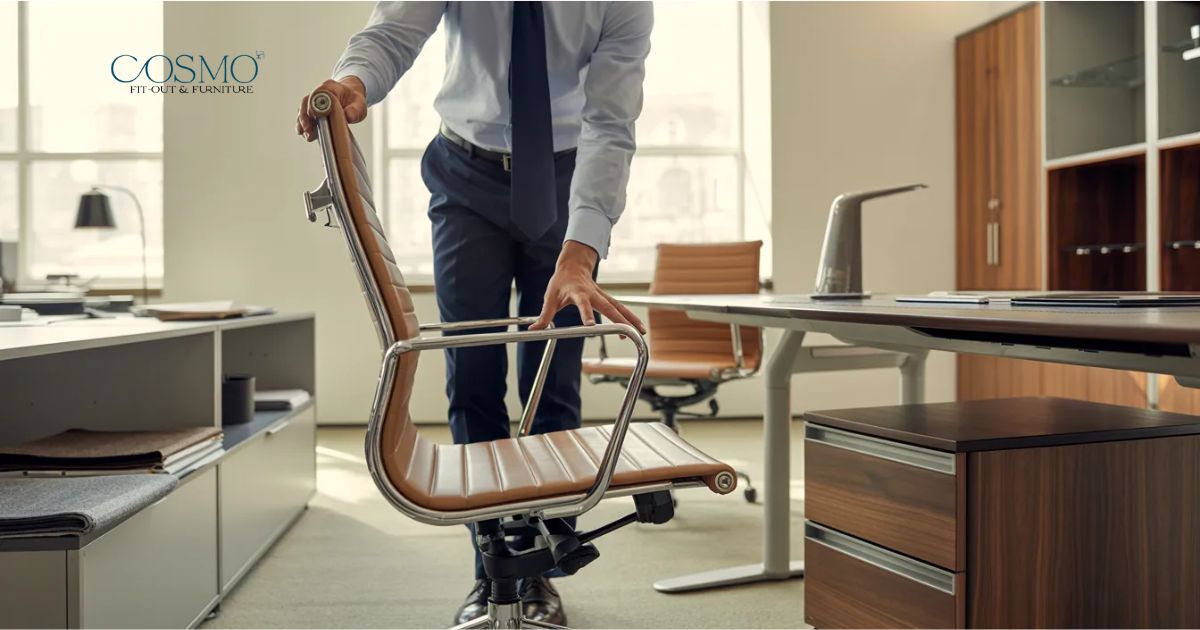
Most Dubai businesses discover furniture quality problems after delivery — when replacing or returning large office furniture orders is expensive, disruptive, and often contractually impossible. A structured furniture quality guide gives you the tools to identify quality before you buy, not after. Whether you’re evaluating workstations for a 50-person team or a single executive desk for a CEO office, the same furniture quality guide principles apply — and the same quality failures are consistently avoidable with the right knowledge.
This practical furniture quality guide is built from 8+ years of office furniture manufacturing and supply experience at Cosmo Furniture Store — where we’ve seen every quality failure mode that affects Dubai offices. By the end of this furniture quality guide, you’ll know exactly what to inspect, what questions to ask, and what red flags to reject before any office furniture in Dubai purchase is finalized.
Why a Furniture Quality Guide Matters in Dubai
Dubai’s business environment creates specific furniture quality requirements that make a furniture quality guide more important here than in most global markets. Three factors make quality evaluation critical:
- Climate demands: UAE’s extreme humidity cycling, temperature differentials, and UV exposure accelerate furniture deterioration significantly faster than European climate benchmarks suggest. Without a proper furniture quality guide for material verification, furniture that performs adequately in temperate markets fails prematurely in Dubai conditions.
- Market quality variance: Dubai’s office furniture market spans an exceptionally wide quality range — from wholesale budget pieces at AED 600 per workstation to premium custom solutions at AED 15,000+. Without a furniture quality guide framework, price alone is an unreliable quality indicator in this market.
- High replacement cost: Replacing substandard furniture in Dubai — including disposal, new procurement, delivery, installation, and workspace disruption — typically costs 40-60% more than the original furniture investment. A furniture quality guide applied before purchase eliminates this avoidable expense.
Furniture Quality Guide: Surface and Material Evaluation
Surface quality is the most visible dimension of any furniture quality guide — and the area where quality differences are most immediately apparent to clients and visitors:
Laminate Quality Assessment
Laminate is the most common surface material in Dubai office furniture. Your furniture quality guide laminate evaluation should cover:
- Brand verification: Ask for the laminate brand and origin. German EGGER, Swiss Kronospan, and equivalent certified European brands indicate quality — these are the same materials used in premium European office furniture. Unbranded or generic laminates are a red flag in any furniture quality guide evaluation for Dubai’s climate conditions.
- Scratch resistance test: Press your fingernail firmly across the surface at a 45-degree angle. Quality laminates show no marks. Budget laminates scratch visibly — a failure that appears across an entire office within weeks of use. This simple furniture quality guide test takes 5 seconds and reveals material grade immediately.
- Edge finishing: Examine furniture edges closely. Quality pieces use matching edge banding applied with precision — no gaps, bubbles, or color mismatches at corners. Poor edge banding is the first failure point in Dubai’s humidity conditions, delaminating within 12-18 months. This edge inspection is non-negotiable in your furniture quality guide.
- Color consistency: Check multiple pieces of the same SKU for color consistency. Quality manufacturers maintain batch consistency — budget producers often show visible color variation between pieces in the same order, creating an unprofessional appearance across a workstation cluster.
Wood and Engineered Wood Assessment
For solid wood and veneer furniture, your furniture quality guide evaluation should include:
- Panel thickness: Minimum 18mm for desk surfaces and 16mm for shelving in quality pieces. Thinner panels flex under load, produce hollow sounds when tapped, and deteriorate faster. Tap the surface — a solid sound indicates adequate thickness; a hollow resonance indicates substandard panel specification in your furniture quality guide assessment.
- Joint construction: Open drawers and cabinet doors fully. Quality construction uses dowel joints, cam locks, and mortise-and-tenon joinery. Budget construction relies on staples and basic screws that loosen rapidly under daily use — a consistent failure point your furniture quality guide should specifically test.
- Veneer quality: For veneered pieces, check that veneer coverage is complete with no gaps, bubbles, or lifting at edges. Press firmly at veneer edges — quality veneer shows no movement; delaminating veneer lifts slightly under pressure, indicating adhesive failure that will accelerate in Dubai’s humidity.
Furniture Quality Guide: Frame and Structure Evaluation
Structural integrity determines long-term durability more than any other factor in a complete furniture quality guide:
Metal Frame Assessment
- Steel gauge verification: Quality desk and workstation frames use minimum 1.2mm steel (18 gauge). Thinner steel flexes visibly under normal load — apply moderate lateral pressure to a desk frame and observe any movement. Rigid frames with no deflection indicate appropriate steel specification. This structural test is fundamental to any furniture quality guide for workstations.
- Powder coating quality: Examine powder-coated surfaces under direct light. Quality powder coating shows uniform thickness with no thin spots, runs, or bare metal exposure at edges and corners. Poor powder coating chips within months in Dubai’s humidity — exposing bare steel that corrodes rapidly. Run your finger along frame edges — sharp burrs indicate inadequate surface preparation before coating.
- Weld quality: Where metal components join, inspect weld seams. Quality welds are smooth, consistent, and fully penetrated. Visible porosity, cracking, or irregular bead width indicates poor weld quality that will fail under repeated load cycling — a structural failure your furniture quality guide must identify before purchase.
- Leveling feet: Quality workstations and desks include adjustable leveling feet — essential for Dubai’s commercial buildings where floor levelness varies significantly. Fixed feet that cannot compensate for floor variation create unstable furniture that rocks under use. Confirm leveling adjustment in your furniture quality guide inspection.
Overall Structural Stability
Apply your furniture quality guide stability test to every desk and workstation you evaluate:
- Apply moderate lateral force to the top surface — quality furniture shows minimal deflection
- Load the surface with your body weight briefly — no creaking, flexing, or joint movement should be present
- Open all drawers fully and apply downward pressure — quality drawer slides maintain smooth operation without binding or sagging under load
- Check that all doors and drawers open and close smoothly with consistent resistance throughout their travel — binding or inconsistent movement indicates alignment problems that worsen with use
Furniture Quality Guide: Seating Evaluation
Chair quality has the highest direct impact on employee health and productivity — making seating the most important category in your furniture quality guide:
Ergonomic Standards Verification
- BIFMA certification: The Business and Institutional Furniture Manufacturers Association certification is the objective quality standard for office seating in any furniture quality guide. BIFMA-certified chairs meet tested load, durability, and ergonomic standards. Ask suppliers to provide BIFMA certification documentation — suppliers with genuinely quality products provide this readily.
- Seat height adjustment range: Quality task chairs adjust from 42cm to 54cm minimum — covering the ergonomic requirements of users from 155cm to 195cm in height. Chairs with narrower adjustment ranges exclude significant portions of your workforce from proper ergonomic positioning, a critical failure in any furniture quality guide for team seating.
- Lumbar support quality: Sit in the chair and adjust lumbar support through its full range. Quality lumbar mechanisms provide firm, adjustable support that maintains position throughout adjustment. Lumbar supports that spring immediately back to center or that don’t maintain adjustment position indicate low-quality mechanisms.
- Armrest quality: Quality armrests adjust in height, width, and angle. Test all adjustment mechanisms — they should move smoothly and lock positively without slipping. Armrests that slip under elbow pressure indicate locking mechanism failures that appear within weeks of regular use.
Upholstery and Foam Assessment
- Foam density test: Press firmly into the seat cushion and hold for 5 seconds. Quality foam (minimum 40kg/m3 density) recovers fully within 2 seconds of pressure release. Budget foam compresses permanently within months — creating the “flat seat” problem that reduces ergonomic support and requires premature replacement. This foam test is one of the most revealing quick assessments in any furniture quality guide.
- Fabric durability: Rub the fabric firmly with your thumb for 10 seconds. Quality upholstery fabrics (minimum 100,000 Martindale rub cycles) show no pilling or distortion. Fabrics that pill or show fiber distortion under this test will deteriorate rapidly under daily office use.
- Stitching quality: Examine all seams on upholstered chairs. Consistent stitch density, matching thread color, and no loose threads indicate quality manufacture. Irregular stitching and loose thread ends indicate assembly quality issues that affect overall chair durability.
Furniture Quality Guide: Mechanism and Hardware Evaluation
Hardware quality determines daily functional experience — and is consistently underweighted in most furniture quality guide assessments:
Drawer and Door Hardware
- Drawer slide quality: Open and close every drawer at different speeds. Quality ball-bearing slides operate smoothly at all speeds with consistent resistance. Friction slides (plastic or nylon rollers) bind at higher speeds and deteriorate rapidly — avoid any furniture using these in your furniture quality guide evaluation for frequently accessed storage.
- Soft-close mechanisms: Quality cabinet doors and drawers include soft-close dampers — they decelerate and close silently in the final 30mm of travel. Doors and drawers that slam shut indicate absent or failed dampers — a noise and durability issue that affects professional office environments.
- Lock quality: Test all locking mechanisms. Quality locks engage positively with minimal play and require consistent key force throughout their operation cycle. Locks with excessive play or inconsistent engagement indicate low-quality cylinder mechanisms that fail frequently.
Chair Mechanism Assessment
- Tilt mechanism: Sit in the chair and engage the tilt function. Quality mechanisms provide smooth, consistent resistance throughout the tilt range and lock positively at set positions. Mechanisms that jerk, release suddenly, or fail to maintain lock position indicate component quality failures.
- Gas cylinder quality: Adjust seat height several times in quick succession. Quality gas cylinders maintain set height without gradual sinking. Cylinders that sink even slightly between adjustments will fail to maintain height under sustained body weight within months — creating daily frustration and ergonomic inconsistency.
- Castor quality: Roll the chair across the floor surface it will be used on. Quality castors roll smoothly in all directions with minimal resistance. Castors that bind, catch, or require significant force to initiate movement indicate low-quality wheel materials that leave marks on flooring and deteriorate rapidly.
Furniture Quality Guide: Supplier Qualification Standards
Product quality verification is only half of a complete furniture quality guide — supplier qualification determines whether quality promises are consistently delivered:
Documentation Requirements
Your furniture quality guide supplier qualification should require:
- Material certificates: Laminate brand and grade documentation, foam density specifications, fabric Martindale rating certificates, and steel grade specifications — in writing, not verbally
- BIFMA or equivalent certification: For all seating products, objective third-party certification documentation
- Warranty terms in writing: Minimum 2-year comprehensive warranty, 5-year structural warranty — documented with specific coverage terms, exclusions, and claim procedures
- Trade license and VAT registration: Confirm legal trading status and VAT compliance for proper invoice documentation
Quality Signals from Supplier Behavior
Your furniture quality guide extends to evaluating supplier behavior as a quality proxy:
- Showroom quality: A supplier’s showroom reflects their manufacturing standards. Display furniture with visible defects — scratched surfaces, misaligned doors, inconsistent finishes — indicates production quality tolerance that will appear in your delivered order
- Material transparency: Quality suppliers like Cosmo Furniture Store specify materials proactively — German EGGER laminates, steel gauge, foam density. Suppliers who deflect material specification questions or provide vague answers (“best quality materials”) are concealing substandard specifications
- Reference willingness: Genuine quality suppliers provide contactable references from similar-scale projects without hesitation. Reluctance to provide references is a consistent indicator of quality or service problems your furniture quality guide evaluation should treat as disqualifying
- Sample provision: Quality suppliers provide physical material samples before order confirmation. Suppliers who refuse sample requests or who provide samples significantly better than production materials are using sampling as a sales tool rather than a quality transparency mechanism
Furniture Quality Guide: The 5-Minute Showroom Assessment
Use this furniture quality guide checklist during any showroom visit — completing a full quality assessment in under 5 minutes per furniture category:
Surfaces (60 seconds):
☐ Scratch test with fingernail — no marks on quality laminate
☐ Edge banding — no gaps, bubbles, or lifting
☐ Color consistency across multiple pieces
Structure (90 seconds):
☐ Tap desk surface — solid sound, not hollow
☐ Apply lateral force to frame — minimal deflection
☐ Check leveling feet — adjustable present
☐ Powder coating — no thin spots or bare edges
Hardware (60 seconds):
☐ Drawers at multiple speeds — smooth ball-bearing slides
☐ Doors — soft-close present, consistent resistance
☐ Locks — positive engagement, minimal play
Seating (90 seconds):
☐ Seat height adjustment — smooth through full range
☐ Foam test — full recovery within 2 seconds
☐ Lumbar adjustment — maintains position under pressure
☐ Gas cylinder — no sinking after height adjustment
☐ Castors — smooth rolling in all directions
Key Takeaways: Furniture Quality Guide for Dubai Offices
- Material specification beats price as a quality indicator — in any furniture quality guide, asking for laminate brand, steel gauge, and foam density tells you more about quality than price point alone.
- Edge banding is the fastest quality reveal — poor edge banding delamination in Dubai’s humidity is the most common early failure mode, and your furniture quality guide edge inspection takes 10 seconds to complete.
- The foam density test is non-negotiable for seating — 5 seconds of firm pressure reveals foam quality that determines whether chairs last 1 year or 8 years of daily use.
- BIFMA certification provides objective seating quality assurance — request documentation, not verbal confirmation, in your furniture quality guide supplier evaluation.
- Supplier transparency is a quality proxy — suppliers who proactively specify materials and provide certificates without prompting consistently deliver better quality than those who avoid material questions.
- Physical inspection is irreplaceable — no amount of catalog research substitutes for the 5-minute furniture quality guide showroom assessment that reveals construction quality directly.
- Written documentation protects your investment — material specs, warranty terms, and delivery scope confirmed in writing in your furniture quality guide process create enforceable quality standards.
Frequently Asked Questions: Furniture Quality Guide
What is the most important factor in a furniture quality guide?
Material specification is the most important factor in any furniture quality guide — specifically laminate brand for surface materials and steel gauge for structural frames. These two specifications determine 70% of long-term furniture performance in Dubai’s climate conditions. A furniture quality guide that confirms German EGGER laminate and minimum 1.2mm powder-coated steel frame immediately separates quality furniture from budget alternatives, regardless of price positioning or supplier claims.
How do I test furniture quality quickly at a showroom?
The 5-minute furniture quality guide showroom test covers four areas: surface scratch test with your fingernail (quality laminates show no marks), frame stability test with lateral pressure (quality frames show minimal deflection), drawer slide test at multiple speeds (quality ball-bearing slides operate smoothly), and foam compression test (quality foam recovers fully within 2 seconds). These four tests in your furniture quality guide identify the most common quality failure points before purchase.
Does expensive furniture always mean better quality?
No — price is an unreliable quality indicator without a structured furniture quality guide to verify specifications. Dubai’s furniture market includes budget products priced as premium and genuine quality products at competitive pricing. A furniture quality guide based on material verification — laminate brand, foam density, steel gauge, BIFMA certification — provides objective quality assessment independent of price positioning. Cosmo Furniture Store delivers German EGGER laminate quality across our best office furniture in Dubai range at pricing that challenges many budget competitors — demonstrating that price and quality are not synonymous in Dubai’s market.
What warranty should quality office furniture come with?
Your furniture quality guide warranty standard should require minimum 2-year comprehensive coverage and 5-year structural warranty on frames and mechanisms — in writing with specific coverage terms. Suppliers offering shorter warranty periods are effectively communicating limited confidence in their product durability. A furniture quality guide warranty review should also confirm whether claims are resolved on-site or require workshop return — on-site resolution is the appropriate standard for quality suppliers serving Dubai businesses.
How do I evaluate chair quality specifically?
Chair quality evaluation in your furniture quality guide requires three specific tests: the foam compression test (press firmly for 5 seconds — quality foam recovers fully within 2 seconds), the gas cylinder test (adjust height rapidly several times — quality cylinders maintain set height without sinking), and the BIFMA certification check (request written documentation — verbal certification claims are unverifiable). These three furniture quality guide chair tests identify the most common failure modes that affect daily ergonomic performance and product lifespan.
Where can I find quality-verified office furniture in Dubai?
Cosmo Furniture Store in Al Barsha 1, Dubai meets every standard in this furniture quality guide — German EGGER laminates specified on all products, minimum 1.2mm powder-coated steel frames, BIFMA-compliant seating, 5-year structural warranty, and physical showroom where every quality test in this furniture quality guide can be performed before purchase. Our complete range — from Office Workstation Table Dubai systems to Executive Office Desk Dubai configurations, Best Meeting Room Chairs Dubai, and Modern Reception Desk Dubai designs — is available for physical inspection at our Al Barsha 1 showroom. Call +971 55 145 2819 to schedule a consultation.
Conclusion: Apply This Furniture Quality Guide Before Every Purchase
A structured furniture quality guide transforms office furniture procurement from an instinct-based decision into a verifiable quality process. The material specifications, physical tests, and supplier qualification standards in this furniture quality guide take less than 30 minutes to apply to any furniture evaluation — and consistently prevent the expensive quality failures that affect Dubai businesses who skip structured evaluation.
The most important principle in any furniture quality guide is physical verification before commitment. No catalog, website, or supplier presentation substitutes for personally conducting the scratch test, frame stability test, foam compression test, and hardware quality assessment that reveal construction quality directly. Apply this furniture quality guide consistently — and your Dubai office furniture investments will deliver the quality, durability, and value your business requires for a decade or more.
Visit Cosmo Furniture Store at Al Barsha 1, Dubai, or call +971 55 145 2819 to conduct every test in this furniture quality guide on our complete range of modern office furniture in Dubai — where our team welcomes quality scrutiny because our products consistently pass every evaluation.
Visit Our Showroom: Pin Location 📍
In Case You Missed These Posts:
- The Hidden Factors Behind Successful Workplace Transformations
- From Vision to Reality: Designing Workspaces That Inspire Productivity
- Inside the Makeover: How Dubai Businesses Are Redefining Professional Spaces
- How Can a Fitout Company Transform Your Spacе?
- Why Do You Need Office Furniture?
- The Importance of Fitout Services in Dubai for Modern Office Design
- Dubai’s Top Interior Design Services for Modern Spaces
- What Wood is Used for Furniture: Best Type to Choose for Office
- Zoning Workspaces with Innovative Furniture
- Can Interior Designers Help with Eco-Friendly Solutions?