
Blog
Designing Workspaces That Inspire: From Vision to Reality in Dubai Offices 2026


A modern Dubai office is far more than four walls, a floor plan, and a furniture catalogue. It is the physical environment where your organization’s culture takes shape, where employee energy is either sustained or drained, and where clients form their first impression of your professional standards — all before a single meeting begins. This is precisely why designing workspaces has become a strategic priority for Dubai’s most competitive organizations rather than a procurement exercise delegated to facilities management.
Organizations that approach designing workspaces deliberately — with equal attention to ergonomics, layout, lighting, technology, and brand expression — consistently outperform those that treat office setup as a commodity decision. At Cosmo Furniture Store, we have guided 500+ UAE businesses through the designing workspaces process over 8+ years — and the patterns that separate transformative results from disappointing ones are consistent and learnable.
This guide examines every element that determines success in designing workspaces for Dubai’s demanding business environment — from ergonomic furniture selection to brand identity expression — with practical guidance for organizations at every scale and sector.
Why Designing Workspaces Directly Affects Business Performance
The connection between physical workspace quality and measurable business performance is no longer speculative — it is extensively documented across multiple research disciplines. Environmental psychology research consistently demonstrates that physical surroundings affect cognitive performance, stress levels, and creative capacity. Ergonomics research connects specific furniture specifications to health outcomes that translate directly into sick day rates and afternoon productivity quality. Organizational behavior research links workspace design to collaboration frequency, innovation output, and employee retention.
For Dubai businesses, designing workspaces carries additional strategic weight. The emirate’s position as a global business hub means that professional environments are benchmarked against world-class workspace standards from London, Singapore, and New York. Designing workspaces that meet these implicit international standards is not a luxury positioning decision — it is a competitive requirement for any Dubai organization that serves internationally benchmarked clients or recruits from a globally mobile talent pool.
Element 1: Ergonomic Furniture as Performance Infrastructure
Ergonomic furniture is the foundation of effective designing workspaces — not because it looks impressive, but because it directly determines how employees feel during the 6-8 daily hours they spend in physical contact with workstation surfaces and seating. Furniture that fails ergonomically creates musculoskeletal complaints, afternoon energy loss, and concentration disruption that compounds across every working day of the furniture’s operational lifespan.
In practical designing workspaces terms, ergonomic investment priorities follow a clear hierarchy. BIFMA-certified task chairs with multiple adjustment axes — lumbar depth and height, seat depth, armrest width and height — are the highest-return ergonomic investment because seating affects every working hour for every team member. Quality modular Office Workstation Table Dubai systems with appropriate surface height, generous workspace depth, and integrated cable management eliminate the daily friction that ergonomically inadequate workstations create.
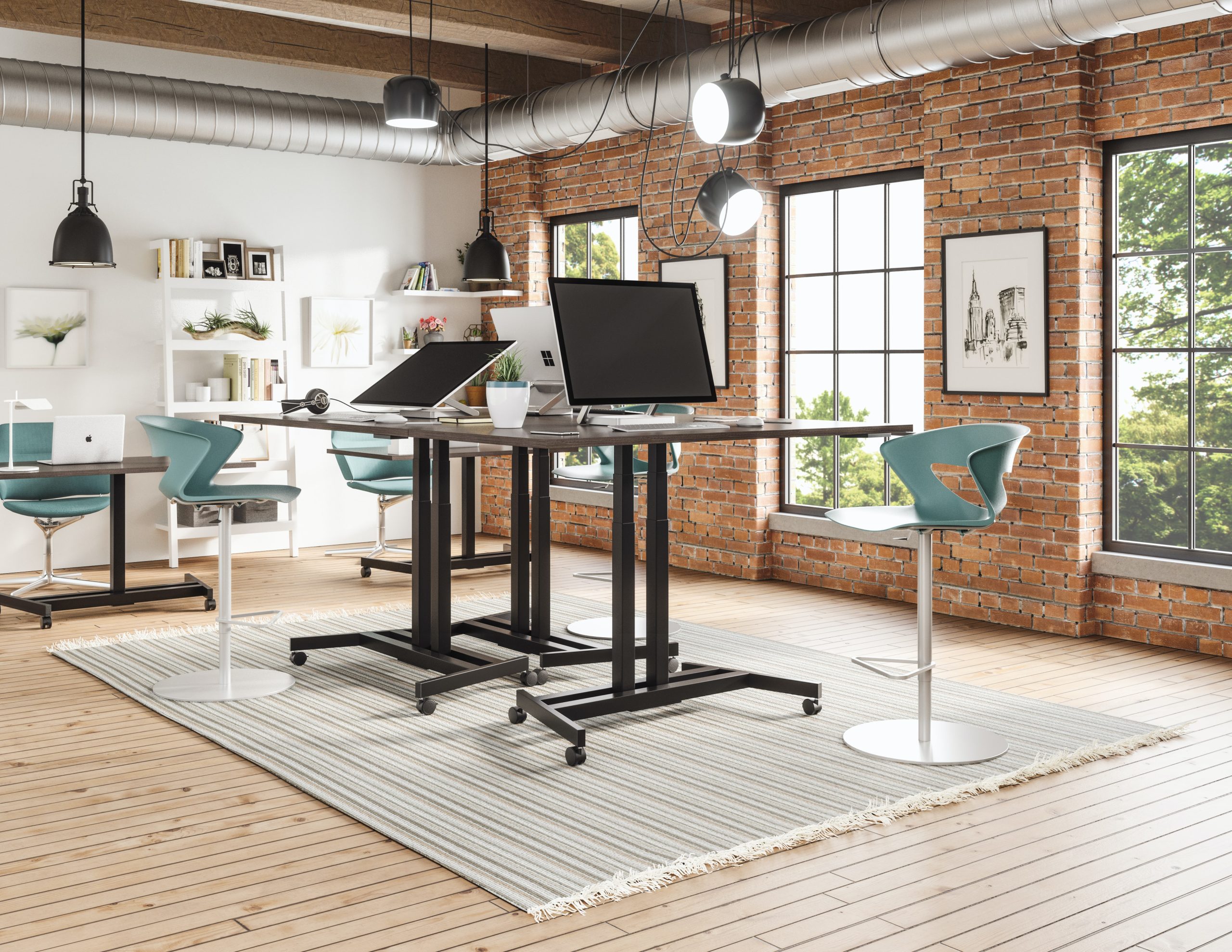
Height-adjustable desks represent the leading edge of ergonomic designing workspaces investment in 2026 — allowing alternation between seated and standing positions that reduces the afternoon energy dips that standard fixed-height desks create. For Dubai organizations recruiting knowledge workers who increasingly expect these features, height adjustability has transitioned from premium option to standard expectation in competitive workspace design.
Element 2: Lighting Design as Atmospheric Architecture
Lighting is consistently the most underinvested element in designing workspaces across Dubai’s commercial market — despite extensive evidence connecting lighting quality directly to employee focus, mood, and physical health outcomes. Most office renovations specify furniture extensively while treating lighting as a secondary building services consideration handled separately from the overall design vision.
Effective designing workspaces treats lighting as atmospheric architecture — using natural light access, warm artificial supplementation, and task lighting coordination to create environments that sustain energy and focus throughout the full working day.
Specific designing workspaces lighting principles include: positioning high-concentration workstations parallel to window facades to maximize natural light without glare; using warm-temperature artificial lighting (2700-3000K) in client-facing reception and meeting spaces to create welcoming ambience; and layering task lighting for focused work zones to reduce eye strain without compromising the overall atmosphere.
Element 3: Functional Layout That Reflects How Work Actually Happens
Layout planning is the strategic core of designing workspaces — determining how effectively the physical environment supports the actual workflows, collaboration patterns, and focus requirements of the teams using it. Generic open-plan layouts that position identical workstations in uniform rows represent the most common layout failure in Dubai office design: they address headcount without addressing how different roles actually work throughout the day.
Effective designing workspaces layout planning begins with workflow investigation rather than floor plan aesthetics. Which teams collaborate most frequently — are their workstations proximate? Which roles require extended focus periods — are they positioned away from high-traffic circulation routes? Which employees handle client calls regularly — do they have access to semi-private acoustic zones?
The most productive designing workspaces layout implementations in Dubai’s 2026 market follow activity-based zone principles: dedicated focus zones with acoustic screening for concentration-intensive work, open collaboration zones with flexible furniture for spontaneous team discussion, formal meeting rooms for structured client and internal meetings, and social zones where informal relationship-building occurs naturally during breaks.
This zone-based approach to designing workspaces delivers measurably better output quality than uniform workstation layouts by matching physical environment to cognitive task requirements.
Element 4: Technology Integration as Invisible Infrastructure
Technology integration is the least visible but most practically significant element in designing workspaces that function smoothly as professional environments. The technology layer of workspace design includes cable management systems that eliminate surface clutter, integrated power access that removes charging friction, meeting room AV systems that connect reliably without IT intervention, and workstation configurations that accommodate dual-monitor setups and peripheral devices without afterthought adaptation.
The specific designing workspaces technology integration elements that deliver the highest daily friction reduction in Dubai’s 2026 office market include: surface-mounted and recessed power modules with USB-C and standard power access at every workstation, integrated cable routing channels in desk frames and partition systems, and wireless charging surfaces for mobile devices.
These features eliminate the extension cables, visible charging clutter, and power access competition that characterize offices where technology was treated as an installation-stage addition rather than a core designing workspaces specification.
Element 5: Reception Design as First Brand Communication
Reception design holds a unique position in designing workspaces strategy — it creates the first physical brand impression that every client, partner, and prospective employee experiences. A premium Modern Reception Desk Dubai in quality materials communicates organizational investment, professional standards, and brand confidence in the 7 seconds before any conversation begins.
Effective designing workspaces for reception areas requires three simultaneous considerations: functional efficiency for staff who use the space operationally, visual impact for visitors who form their brand impression from it, and material quality that maintains its professional appearance through years of daily use.
Premium laminate or veneer finishes, quality ambient lighting that creates welcome rather than institutional coldness, and spatial generosity that avoids the cramped impression of under-designed reception areas all contribute to the designing workspaces outcome that reception investment is intended to achieve.
Element 6: Meeting Room Environments That Support Decision-Making
Meeting rooms are where Dubai businesses make their most consequential decisions — and where clients evaluate organizational capability during presentations that determine engagement outcomes. The physical environment of conference rooms directly affects the quality of discussions conducted within them, making meeting room specification one of the highest-stakes elements in any designing workspaces project.
Quality Best Meeting Room Chairs Dubai that provide genuine comfort through 60-90 minute discussions, conference tables proportioned correctly for the room dimensions and typical meeting group size, and acoustic treatment that manages sound quality for both in-room and video conference participants — these elements together create the meeting environment that designing workspaces investment in conference facilities should deliver.
Element 7: Executive Office Design as Leadership Brand
Executive office design communicates leadership credibility and organizational hierarchy in ways that directly affect client confidence and internal culture. A premium Executive Office Desk Dubai configuration in quality veneer or laminate, positioned to allow both focused work and accessible leadership presence, creates the physical environment that senior roles require to function effectively while communicating the organizational status that client-facing leadership interactions demand.
In designing workspaces terms, executive offices should be distinguished by quality and proportion rather than exclusion — visible and accessible from team environments, with furniture specifications that communicate authority through material quality rather than physical separation from the organization they lead.
Element 8: Aesthetic Identity as Brand Expression
The final element in designing workspaces that delivers genuine business value is aesthetic coherence — the deliberate alignment of material palette, color choices, and design language with the specific brand identity and organizational culture being expressed. Generic contemporary aesthetics applied regardless of organizational character produce offices that look acceptable but communicate nothing specific about the business inhabiting them.
Effective designing workspaces aesthetic identity requires translating specific brand values — innovation, heritage authority, collaborative culture, precision — into specific material and design decisions rather than selecting furniture from trend-driven catalogues. The organization that positions itself as heritage-driven and trustworthy needs different material language than the technology startup positioning on innovation and agility — and designing workspaces that ignores this distinction consistently produces offices that contradict rather than reinforce the brand story every other marketing touchpoint communicates.
Designing Workspaces: Investment That Pays Back
Understanding designing workspaces as a long-term investment rather than a capital expenditure changes the decision-making framework that governs budget allocation. Quality furniture properly specified for UAE climate conditions delivers 10-15 year operational lifespans — making per-year cost dramatically more favorable than initial price comparison with budget alternatives requiring replacement every 3-5 years.
The non-furniture returns on strategic designing workspaces investment are equally significant. Talent acquisition research consistently shows that workspace quality influences offer acceptance decisions among senior candidates evaluating competing opportunities. Client confidence research demonstrates that physical environment quality affects perceived professional competence and fee justification. Employee retention data connects workspace satisfaction to tenure length in ways that make designing workspaces investment directly relevant to recruitment cost management.
Key Takeaways: Designing Workspaces in Dubai 2026
- Workspace quality is a performance variable — designing workspaces deliberately produces measurably better productivity, retention, and client impression outcomes than generic office setup approaches.
- Ergonomics is infrastructure, not luxury — BIFMA-certified seating and height-adjustable workstations deliver daily performance returns that justify investment through productivity and health outcomes.
- Layout must reflect actual workflows — activity-based zone designing workspaces that matches physical environment to cognitive task requirements consistently outperforms uniform workstation layouts.
- Technology integration requires early specification — treating cable management and power access as core designing workspaces criteria eliminates the daily friction that retrofit adaptation creates.
- Reception investment delivers the highest ROI — the first physical brand impression created by designing workspaces reception areas affects client relationships before any professional conversation begins.
- Aesthetic coherence requires brand translation — effective designing workspaces converts organizational brand values into specific material and design decisions rather than applying generic contemporary aesthetics.
Frequently Asked Questions: Designing Workspaces
Why is designing workspaces important for productivity in Dubai?
Designing workspaces directly affects productivity because physical environment quality influences cognitive performance, stress levels, collaboration frequency, and employee energy throughout the working day. In Dubai’s competitive business environment — where offices are benchmarked against international standards — designing workspaces that meet premium expectations is a competitive requirement for talent attraction, client confidence, and operational performance.
What are the most important elements when designing workspaces?
The most impactful elements in designing workspaces are ergonomic furniture specification, activity-based layout planning, deliberate lighting design, core technology integration, reception and client-facing environment quality, and authentic brand identity expression. Each element addresses a different dimension of workspace performance — the most successful designing workspaces projects address all simultaneously rather than prioritizing aesthetics at the expense of functionality.
How does layout affect the success of designing workspaces?
Layout determines whether the physical environment supports or contradicts actual workflows — making it the strategic foundation of designing workspaces that genuinely improve daily operations. Activity-based layouts with distinct zones for focus work, collaboration, client interaction, and social connection outperform uniform workstation arrangements by matching furniture environment to cognitive task requirements throughout the working day.
How long does a professional designing workspaces project take in Dubai?
A complete designing workspaces project for a 20-50 person Dubai office typically takes 3-6 months from initial consultation to installation completion. Custom furniture production requires 4-6 weeks. Professional layout planning and specification takes 4-8 weeks. Installation in occupied offices is typically phased over 2-4 weeks to minimize operational disruption. Many organizations phase their designing workspaces investment across 12-24 months to spread capital expenditure across budget cycles without delaying initial improvements.
How do I choose the right partner for designing workspaces in Dubai?
Select a designing workspaces partner with verified Dubai market presence of minimum 5 years, cross-sector project references at similar scale to your organization, written warranty terms on all furniture, and a complimentary layout planning service that demonstrates design capability before financial commitment. Showroom visits are essential — the quality of a supplier’s own physical environment directly reflects the designing workspaces standards they will deliver for your project.
Where can Dubai businesses get expert designing workspaces guidance?
Cosmo Furniture Store in Al Barsha 1, Dubai provides complete designing workspaces consultation — from initial workflow investigation and brand identity translation through furniture specification, 3D layout visualization, and complete installation. Our 8+ years of cross-sector Dubai experience across financial services, technology, healthcare, government, and creative sectors means we understand exactly which designing workspaces decisions deliver the highest performance return for your specific organization.
Call +971 55 145 2819 to schedule your free consultation — or visit our Al Barsha 1 showroom to experience our full range of Office Workstation Table Dubai systems, Executive Office Desk Dubai configurations, Best Meeting Room Chairs Dubai selections, and Modern Reception Desk Dubai designs in person.
Conclusion: Designing Workspaces Is Designing Business Success
In 2026, the office is no longer a passive backdrop to the work that happens within it — it is an active participant in organizational performance, culture, and competitive positioning. Designing workspaces deliberately, with equal attention to ergonomic infrastructure, functional layout, technology integration, lighting quality, and authentic brand expression, is one of the highest-return strategic investments available to Dubai’s ambitious organizations.
The journey from vision to productive reality requires expertise that spans furniture specification, space planning, brand translation, and project management — capabilities that designing workspaces projects require in combination, not in isolation. At Cosmo Furniture Store, we provide all of these capabilities within a single, experience-grounded service that has guided 500+ UAE businesses through successful designing workspaces projects across every sector Dubai’s diverse economy represents.
Visit our Al Barsha 1 showroom, explore our modern office furniture in Dubai collection, or call +971 55 145 2819 today — and let us help you design a workspace that delivers the performance, impression, and culture your organization deserves.
Visit Our Showroom: Pin Location 📍
In Case You Missed These Posts:
- The Hidden Factors Behind Successful Workplace Transformations
- From Vision to Reality: Designing Workspaces That Inspire Productivity
- Inside the Makeover: How Dubai Businesses Are Redefining Professional Spaces
- How Can a Fitout Company Transform Your Spacе?
- Why Do You Need Office Furniture?
- The Importance of Fitout Services in Dubai for Modern Office Design
- Dubai’s Top Interior Design Services for Modern Spaces
- What Wood is Used for Furniture: Best Type to Choose for Office
- Zoning Workspaces with Innovative Furniture
- Can Interior Designers Help with Eco-Friendly Solutions?